
Article Authors
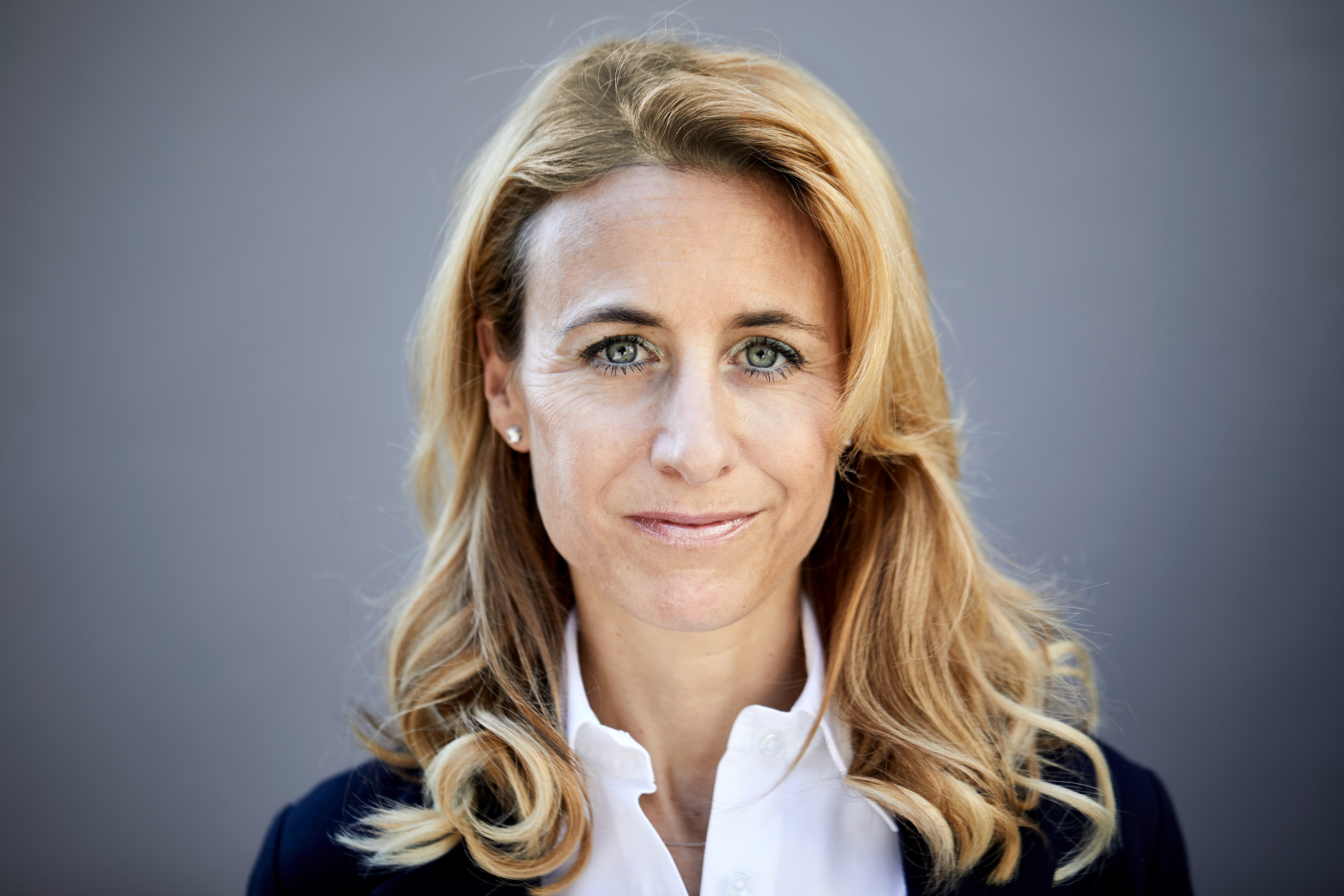
Isabelle Nüssli
Dr. Isabelle Nüssli is a partner at Roy C. Hitchman AG, a leading, repeatedly award-winning Swiss executive search boutique, headquartered in Zurich since 1986. It is a member of the international Tinzon Group. Isabelle is a multilingual senior executive and board member with experience in international business leadership, corporate governance, and succession planning. A two-time Amazon #1 bestselling business book author and leadership coach for board & C-level and tech-based growth firms, she helps them recruit and onboard the right talent, build a high-performance team, and navigate change and transformation.
Organizations don't appoint leaders into vacancies. They appoint them
into leadership systems.
Organizations devote enormous effort to selecting senior leaders.
Experience, industry expertise, functional knowledge, international exposure
and a proven track record are carefully evaluated through structured
interviews, references and psychometric assessments.
These dimensions matter. They remain the price of admission for senior
leadership.
Yet even the most comprehensive selection processes cannot fully explain
why seemingly comparable leaders create dramatically different organizational
outcomes.
The challenge is no longer to assess candidates more thoroughly. It is
to understand more deeply the dimensions that ultimately determine leadership
effectiveness.
Qualifications are necessary. They are not sufficient.
Traditional selection processes are highly effective at evaluating
qualifications. They answer an important question:
Can this person perform the role?
Experience, expertise and credibility remain essential. Without them,
sustainable leadership is unlikely.
Over the past two decades, our understanding of the qualities that
underpin effective leadership has evolved considerably. Leadership assessments
increasingly consider qualities such as judgment, learning agility,
self-awareness, resilience, influencing skills and systems thinking. These
qualities are considerably more difficult to evaluate than qualifications
alone, yet they increasingly distinguish leaders who simply perform from those
who elevate organizations.
Competence gets leaders shortlisted. Context
determines whether it translates into organizational impact.
Leadership success is contextual.
It emerges from the interaction between the individual, the executive
team, the board, the organization's strategy, culture, ownership structure,
external environment and stage of development. The same executive may thrive in
one organization and struggle in another. The explanation is rarely competence
alone. More often, the leadership system and its context determine whether
capability turns into impact.
Leadership is rarely exercised in isolation. Neither should it be
assessed that way.
The decisive questions are changing.
For many years, leadership selection has focused primarily on
identifying who is capable of succeeding. Increasingly, however, the decisive
questions are:
·
Will this individual strengthen decision quality?
·
Will they complement the existing leadership team?
·
Will they challenge assumptions constructively while
building trust?
·
Will they inspire people, engage the workforce and
create the conditions for others to perform at their best?
·
Will they increase the organization's capacity to
adapt, innovate and remain future-ready?
Collectively, these questions explore something qualifications cannot: a
leader's likely contribution within a specific organizational context. Credentials
alone cannot answer them. What is required is the integration of evidence,
observation, organizational context and judgment.
AI makes this challenge even more relevant.
Artificial intelligence is making information more accessible and
technical expertise easier to verify. Ironically, this increases the value of
distinctly human capabilities.
AI doesn't reduce the importance of judgment. It increases it.
As information becomes more abundant, the ability to integrate perspectives,
navigate ambiguity and exercise sound judgment becomes an increasingly
important differentiator, for the leaders themselves as well as for those
entrusted with selecting them.
Looking beyond 'cultural fit'
Organizations often refer to cultural fit when selecting leaders. The
intention is understandable.
Culture matters. Values matter. How leaders engage with people matters.
Assessing whether someone will genuinely thrive within an existing culture is
already a demanding task and is often more complex than it appears.
The expression 'cultural fit' can still narrow the conversation too
quickly. In common usage, it often suggests compatibility with the organization
as it currently is. That question matters. A leader who cannot read the
culture, build trust or adapt to important norms is unlikely to succeed.
The next question is harder: is the current culture also the one the
organization needs for the future?
Some cultures need continuity. Others need more debate, more openness,
more speed, more discipline or more constructive challenge. A reflective and
socially intelligent leader can respect the strengths of the existing culture
while helping it evolve where necessary.
Leadership selection therefore requires two cultural judgments. The
first concerns a leader's ability to thrive in the current environment. The
second concerns the contribution that leader may make to the culture the
organization needs next.
Sometimes that contribution reinforces what already works. Sometimes it
introduces complementary perspectives, constructive challenge or capabilities
that are currently missing.
The goal is to strengthen the leadership system the organization needs
to succeed tomorrow.
What organizations need to assess next
Leadership selection is entering its next phase.
Organizations have become increasingly effective at assessing
qualifications and are making significant progress in evaluating leadership
capabilities. The next frontier lies in understanding a leader's future
contribution and potential within a specific organizational context.
This calls for a broader perspective. Organizations need to look beyond
whether an individual is qualified for a role and understand how that person’s capabilities
are likely to influence decision-making, leadership dynamics, employee
engagement and organizational performance over time.
Future contribution is not visible on a CV. Nor can it be inferred from
a successful career alone. It emerges from the interaction between the
individual and the leadership system they join. Assessing that potential
requires evidence, context and judgment in equal measure.
Every leadership appointment carries an expectation. Organizations
expect leaders to create value, inspire people, navigate uncertainty and
prepare the business for challenges that have yet to emerge.
Ultimately, the future of an organization depends as much on the quality of leadership selection as on the quality of leadership itself.


